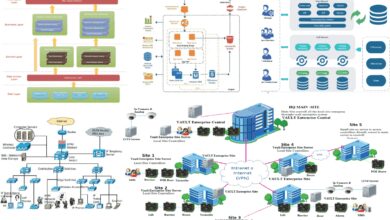
In today’s hyper-connected digital world, system integration isn’t just a tech buzzword—it’s a business imperative. From streamlining operations to boosting data accuracy, effective integration powers smarter decisions and faster growth.






What Is System Integration and Why It Matters

System integration refers to the process of connecting different computing systems, software applications, and IT infrastructure to function as a coordinated whole. This enables organizations to eliminate data silos, improve communication between departments, and automate workflows across platforms. In an era where data drives decisions, the ability to seamlessly share information across systems is critical for agility, scalability, and competitive advantage.
Defining System Integration in Modern Business
At its core, system integration involves linking disparate systems—such as ERP, CRM, HRIS, and supply chain platforms—so they can exchange data and operate cohesively. This is not merely about connecting software; it’s about creating a unified digital ecosystem where information flows freely and securely. According to Gartner, system integration is a foundational element of digital transformation, enabling organizations to respond faster to market changes.
- It bridges legacy systems with modern cloud applications.
- It supports real-time data synchronization across departments.
- It reduces manual data entry and human error.
The Evolution of Integration Technologies
System integration has evolved significantly over the decades. In the 1980s and 1990s, point-to-point connections were common, leading to complex, fragile networks often called “spaghetti architectures.” The 2000s introduced middleware and Enterprise Service Buses (ESB), which provided more structured integration. Today, with the rise of APIs, cloud computing, and microservices, integration has become more agile, scalable, and developer-friendly. Platforms like MuleSoft and Amazon API Gateway exemplify modern integration tools that support rapid deployment and monitoring.
“Integration is no longer a back-office function—it’s a strategic capability that drives innovation and customer experience.” — Forrester Research
Types of System Integration Approaches
Not all system integration strategies are the same. The choice of integration method depends on an organization’s architecture, data volume, scalability needs, and existing technology stack. Understanding the different types helps businesses select the most effective approach for their goals.
Point-to-Point Integration
Also known as “direct integration,” this method connects two systems directly using custom APIs or scripts. While simple to implement for small-scale needs, it becomes unmanageable as the number of systems grows. Each new connection requires a new integration, leading to exponential complexity.
- Best for: Small businesses with limited systems.
- Drawbacks: High maintenance, poor scalability, and lack of visibility.
- Example: Connecting a CRM directly to an email marketing tool.
Vertical or Silo Integration
This approach groups systems by function or department (e.g., finance, HR, sales) and integrates them vertically within their silo. While it improves internal efficiency, it doesn’t solve cross-functional data sharing issues.
- Best for: Organizations undergoing partial digital transformation.
- Limitations: Still creates data silos between departments.
- Use case: Integrating payroll, time tracking, and benefits systems within HR.
Horizontal or Enterprise Service Bus (ESB) Integration
The ESB model uses a central middleware platform to route messages between systems. It acts as a communication backbone, standardizing data formats and protocols. This approach is highly scalable and supports real-time integration across large enterprises.
- Best for: Large organizations with complex IT landscapes.
- Advantages: Centralized control, reusable services, and better monitoring.
- Tools: IBM Integration Bus, Apache Camel, WSO2.
Key Benefits of Effective System Integration
When done right, system integration delivers transformative benefits across an organization. It’s not just about connecting software—it’s about unlocking value from data, improving operational efficiency, and enhancing customer experiences.
Improved Data Accuracy and Consistency
One of the most immediate benefits of system integration is the elimination of duplicate or conflicting data. When systems share a single source of truth, decision-makers can trust the information they’re using. For example, when sales, inventory, and finance systems are integrated, order fulfillment becomes more accurate and timely.
- Reduces manual data entry errors by up to 70% (McKinsey).
- Ensures consistent customer records across touchpoints.
- Supports compliance with data governance standards like GDPR and HIPAA.
Enhanced Operational Efficiency
Integrated systems automate workflows that would otherwise require manual intervention. For instance, when a customer places an order online, an integrated system can automatically update inventory, trigger shipping, and notify accounting—all without human input.
- Cuts processing time by 40–60% in supply chain operations.
- Reduces operational costs through automation.
- Enables faster response to market demands.
Better Decision-Making with Real-Time Insights
System integration enables real-time data aggregation from multiple sources, empowering leaders with up-to-the-minute dashboards and analytics. This is crucial for dynamic industries like retail, healthcare, and logistics.
- Executives gain visibility into KPIs across departments.
- AI and machine learning models can be trained on richer, unified datasets.
- Supports predictive analytics for demand forecasting and risk management.
“Companies that integrate their systems see a 25% improvement in decision-making speed.” — Deloitte Insights
Common Challenges in System Integration
Despite its benefits, system integration is not without challenges. Organizations often face technical, organizational, and strategic hurdles that can delay or derail integration projects.
Data Incompatibility and Legacy Systems
Many businesses still rely on legacy systems that use outdated data formats or proprietary protocols. Integrating these with modern cloud applications can be technically complex and costly. For example, a mainframe system from the 1990s may not support REST APIs, requiring custom middleware or data transformation layers.
- Solution: Use API gateways or integration platforms that support legacy protocols.
- Strategy: Adopt a phased migration approach to modernize systems gradually.
- Tool: Dell Boomi offers connectors for legacy systems like AS/400 and mainframes.
Security and Compliance Risks
Connecting systems increases the attack surface for cyber threats. Data flowing between applications must be encrypted, authenticated, and monitored. Additionally, industries like healthcare and finance must comply with strict regulations such as HIPAA and PCI-DSS.
- Best practices: Implement OAuth 2.0, SSL/TLS encryption, and role-based access control.
- Use integration platforms with built-in compliance features.
- Conduct regular security audits and penetration testing.
Organizational Resistance and Change Management
System integration often requires changes in workflows, roles, and responsibilities. Employees may resist these changes due to fear of job loss or unfamiliarity with new tools. Without proper change management, even technically successful integrations can fail to deliver value.
- Solution: Involve stakeholders early in the planning process.
- Provide training and clear communication about benefits.
- Appoint integration champions within departments.
Best Practices for Successful System Integration
To maximize the return on integration investments, organizations should follow proven best practices that address both technical and human factors.
Start with a Clear Integration Strategy
Before writing a single line of code, define your integration goals. Are you aiming to improve customer experience? Reduce operational costs? Enable digital transformation? A clear strategy aligns technology efforts with business objectives.
- Conduct a systems audit to map existing applications and data flows.
- Prioritize integrations based on business impact and feasibility.
- Define KPIs to measure success (e.g., reduced processing time, error rates).
Choose the Right Integration Architecture
The architecture you choose—point-to-point, ESB, or API-led—will shape scalability and maintenance. For most modern organizations, an API-led approach is recommended. As MuleSoft explains, API-led connectivity creates reusable, modular integrations that accelerate future projects.
- Experience APIs: Expose data to end-users (e.g., mobile apps).
- Process APIs: Orchestrate data across systems (e.g., order fulfillment).
- System APIs: Connect to backend systems (e.g., ERP, CRM).
Leverage Integration Platforms (iPaaS)
Integration Platform as a Service (iPaaS) solutions like MuleSoft, Zapier, and Oracle Integration Cloud provide pre-built connectors, workflow automation, and monitoring tools. These platforms reduce development time and lower the barrier to entry for non-technical users.
- Benefits: Faster deployment, lower TCO, cloud-native scalability.
- Use cases: Connecting SaaS applications, automating marketing workflows.
- Considerations: Evaluate security, customization, and vendor lock-in risks.
Real-World Examples of System Integration Success
Across industries, companies are leveraging system integration to drive innovation and efficiency. These case studies illustrate the tangible impact of well-executed integration strategies.
Retail: Omnichannel Integration at Nike
Nike transformed its customer experience by integrating its e-commerce platform, mobile app, in-store systems, and supply chain. This system integration enables features like “Reserve in App, Try in Store” and personalized recommendations based on purchase history.
- Result: 30% increase in digital sales within one year.
- Technology: API-led architecture with Salesforce and MuleSoft.
- Customer benefit: Seamless shopping experience across channels.
Healthcare: Electronic Health Record (EHR) Integration
Hospitals and clinics use system integration to connect EHR systems with lab information systems, billing software, and telehealth platforms. This ensures that patient data is available to authorized providers in real time, improving diagnosis and treatment.
- Example: Mayo Clinic’s integrated EHR system reduced duplicate testing by 20%.
- Challenge: Ensuring HIPAA compliance across all connected systems.
- Solution: Secure APIs with end-to-end encryption and audit trails.
Manufacturing: Smart Factory Integration
Industrial companies are adopting Industry 4.0 principles by integrating IoT sensors, ERP systems, and predictive maintenance tools. This allows real-time monitoring of production lines and automated adjustments to optimize output.
- Case: Siemens’ Amberg factory uses integrated systems to achieve 99.9988% quality rate.
- Technology: OPC UA protocols, cloud-based analytics, and AI-driven insights.
- Impact: Reduced downtime and energy consumption by 15%.
Future Trends in System Integration
The landscape of system integration is rapidly evolving, driven by advances in AI, edge computing, and low-code development. Staying ahead of these trends is essential for maintaining a competitive edge.
AI-Powered Integration
Artificial intelligence is beginning to play a role in automating integration tasks. AI can analyze data patterns, suggest optimal integration paths, and even detect anomalies in data flows. For example, AI-driven tools can auto-map fields between CRM and ERP systems during setup.
- Emerging tools: Microsoft Power Automate with AI Builder.
- Benefits: Faster configuration, reduced manual effort, intelligent error handling.
- Future potential: Self-healing integrations that adapt to changes automatically.
Edge Integration for IoT and Real-Time Processing
As IoT devices generate massive amounts of data, sending everything to the cloud is inefficient. Edge integration processes data locally—on devices or gateways—before sending only relevant information to central systems. This reduces latency and bandwidth usage.
- Use cases: Autonomous vehicles, smart cities, remote monitoring.
- Technology: Edge computing platforms like AWS Greengrass and Azure IoT Edge.
- Challenge: Ensuring consistency between edge and cloud data.
Low-Code and Citizen Integrators
Low-code integration platforms empower non-technical users—“citizen integrators”—to build integrations using drag-and-drop interfaces. This democratizes integration and accelerates project delivery.
- Tools: Microsoft Power Platform, Workato, Tray.io.
- Benefits: Faster time-to-value, reduced IT backlog.
- Risk: Requires governance to prevent shadow IT and security gaps.
“By 2025, 70% of new integrations will be built by non-IT professionals.” — Gartner
What is system integration?
System integration is the process of connecting different software systems and IT infrastructure so they can work together seamlessly, share data, and automate workflows across an organization.
What are the main types of system integration?
The main types include point-to-point, vertical (silo), horizontal (ESB), and modern API-led integration. Each has its own use cases, scalability, and complexity levels.
What are the benefits of system integration?
Key benefits include improved data accuracy, enhanced operational efficiency, real-time insights for decision-making, better customer experiences, and reduced IT costs over time.
What challenges do organizations face in system integration?
Common challenges include legacy system compatibility, data security risks, organizational resistance, lack of skilled personnel, and choosing the right integration architecture.
What is iPaaS and how does it help with system integration?
iPaaS (Integration Platform as a Service) is a cloud-based solution that provides tools for building, deploying, and managing integrations. It simplifies connectivity between SaaS and on-premise applications with pre-built connectors and automation features.
System integration is no longer optional—it’s a strategic necessity for any organization aiming to thrive in the digital age. From breaking down data silos to enabling real-time decision-making, the right integration strategy can transform operations, enhance customer experiences, and drive innovation. While challenges like legacy systems and security risks exist, adopting best practices and leveraging modern tools like iPaaS and API-led connectivity can pave the way for success. As technology continues to evolve, trends like AI-powered integration, edge computing, and low-code platforms will further reshape the landscape, making integration faster, smarter, and more accessible than ever before.
Further Reading: