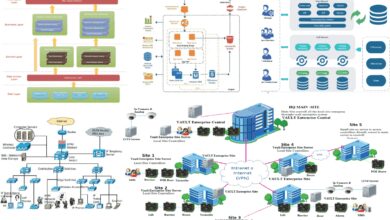
Navigating a system design interview can feel like preparing for a marathon blindfolded. But what if you knew exactly what top engineers and hiring managers look for? Let’s decode the blueprint to not just pass, but dominate your next system design interview with confidence and clarity.





What Is a System Design Interview and Why It Matters

A system design interview is a critical component of the technical hiring process at top-tier tech companies like Google, Amazon, Meta, and Netflix. Unlike coding interviews that focus on algorithms and data structures, system design interviews assess your ability to design scalable, reliable, and maintainable systems under real-world constraints.
Defining System Design Interview
The term system design interview refers to a technical evaluation where candidates are asked to design a large-scale distributed system—such as a URL shortener, social media feed, or ride-sharing platform—within a limited timeframe, typically 45 minutes. The goal isn’t to produce a perfect solution, but to demonstrate structured thinking, trade-off analysis, and architectural awareness.
- It evaluates high-level design skills, not just coding proficiency.
- It simulates real engineering discussions between senior engineers.
- It tests communication, clarity, and problem decomposition.
“The best system designers aren’t those who memorize architectures, but those who can adapt principles to new problems.” — Alex Xu, author of System Design Interview – An Insider’s Guide
Why Companies Use System Design Interviews
Top tech firms rely on system design interviews because they reveal how well a candidate thinks about complexity, scalability, and long-term maintainability. As systems grow from serving thousands to millions of users, small design flaws can lead to massive outages or performance bottlenecks.
- They assess readiness for senior or backend engineering roles.
- They evaluate how well you collaborate and respond to feedback.
- They simulate real-world engineering trade-offs (e.g., consistency vs. availability).
According to Glassdoor, over 78% of software engineers at FAANG companies report facing at least one system design round during their interviews.
Core Skills Evaluated in a System Design Interview
Success in a system design interview isn’t about regurgitating textbook answers. It’s about demonstrating a deep understanding of distributed systems, communication, and engineering judgment. Interviewers are looking for how you approach ambiguity, break down problems, and justify your decisions.
Scalability and Performance
One of the primary concerns in any system design interview is how your architecture handles growth. Can it support 10x more users? What happens when traffic spikes occur?
- You must estimate traffic (QPS, data volume) early in the interview.
- Discuss horizontal vs. vertical scaling strategies.
- Explain how load balancers, CDNs, and caching improve performance.
For example, designing a system like Twitter requires handling millions of tweets per second. You’d need to consider fan-out strategies (push vs. pull models) and database sharding to distribute load effectively.
Reliability and Fault Tolerance
No system is immune to failure. In a system design interview, you’re expected to anticipate failures and design around them.
- Discuss replication strategies (synchronous vs. asynchronous).
- Explain how redundancy prevents single points of failure.
- Use concepts like leader election, heartbeats, and circuit breakers.
A real-world example is Amazon S3, which guarantees 99.999999999% durability by replicating data across multiple availability zones. Mentioning such examples shows depth of understanding.
Maintainability and Extensibility
A well-designed system should be easy to modify, debug, and extend. Interviewers want to see if you’re thinking long-term.
- Advocate for microservices over monoliths when appropriate.
- Discuss API versioning, logging, monitoring, and observability.
- Highlight the importance of documentation and automated testing.
For instance, when designing a payment system, you might suggest using idempotency keys to prevent duplicate transactions—a detail that shows practical experience.
Step-by-Step Framework for Tackling Any System Design Interview
Having a repeatable framework is essential for excelling in a system design interview. Without structure, even experienced engineers can get overwhelmed. Follow this proven 6-step approach to stay organized and impress your interviewer.
1. Clarify Requirements (Functional & Non-Functional)
Never jump into design without first understanding the problem. Ask clarifying questions to define both functional and non-functional requirements.
- Functional: What should the system do? (e.g., Can users edit shortened URLs?)
- Non-functional: How fast should it be? How much data will it store? What’s the uptime requirement?
- Estimate scale: users, requests per second (RPS), storage needs, read/write ratio.
For example, if asked to design TinyURL, ask: “Should it support custom URLs? Expiry dates? Analytics tracking?” These details shape your architecture.
2. Define System Interface (API Contracts)
Once requirements are clear, define the API endpoints your system will expose. This sets the stage for the rest of the design.
- Specify HTTP methods, request/response formats, and status codes.
- Example:
POST /shorten {"url": "https://example.com"} → {"short_url": "abc123"} - Consider authentication, rate limiting, and input validation.
This step shows you think like a product-minded engineer, not just a coder.
3. High-Level Design (Sketch the Architecture)
Now, draw a block diagram showing major components and their interactions. Keep it simple at first, then add detail.
- Include clients, load balancers, web servers, databases, caches, message queues.
- Label data flows (e.g., user → API → DB → cache).
- Use standard notations (e.g., rectangles for services, cylinders for databases).
For a file-sharing system like Dropbox, your sketch might include upload servers, metadata DB, blob storage, sync engine, and CDN.
4. Deep Dive into Core Components
After the high-level view, zoom into critical parts. This is where you demonstrate depth.
- How will you store short URLs? Hash the original URL or use a distributed ID generator?
- Will you use SQL or NoSQL for metadata? Why?
- How will caching (e.g., Redis) reduce database load?
For example, using consistent hashing for cache sharding ensures minimal rehashing when nodes are added or removed.
5. Address Scalability & Bottlenecks
Every system hits limits. Show you understand where they occur and how to overcome them.
- Database bottlenecks: shard by user ID or use read replicas.
- Write-heavy workloads: use message queues (e.g., Kafka) for async processing.
- Hot keys: detect and split them, or use local caching.
In a social feed system, the “home timeline” is often a bottleneck. You might propose a hybrid model: precompute timelines for active users (push), and generate on-demand for inactive ones (pull).
6. Discuss Trade-offs and Alternatives
No design is perfect. The best candidates openly discuss trade-offs.
- Consistency vs. availability: When would you choose eventual consistency?
- CAP theorem implications in distributed databases.
- Cost vs. performance: Is real-time analytics worth the infrastructure overhead?
Saying “I’d use Cassandra for high write throughput but accept eventual consistency” shows maturity.
Common System Design Interview Questions and How to Approach Them
While no two interviews are identical, certain problems appear repeatedly in a system design interview. Familiarizing yourself with these classics—and their underlying patterns—gives you a significant edge.
Design a URL Shortener (e.g., TinyURL)
This is one of the most common entry-level system design questions. It tests your understanding of hashing, database design, and redirection.
- Use base62 encoding (a-z, A-Z, 0-9) to generate short codes.
- Store mappings in a key-value store (e.g., Redis or DynamoDB).
- Handle cache misses with a fallback to the database.
Advanced considerations: rate limiting, spam detection, and geo-distributed redirection for low latency.
Design a Social Media Feed (e.g., Twitter)
This problem assesses your ability to handle high read/write loads and complex data relationships.
- Option 1: Push model – Precompute feeds and store in a cache (fast reads, slow writes).
- Option 2: Pull model – Generate feed on demand (slow reads, fast writes).
- Option 3: Hybrid – Use push for active users, pull for others.
Use Redis Sorted Sets to store timelines with timestamps as scores. Shard by user ID for scalability.
Design a Chat Application (e.g., WhatsApp)
Real-time communication systems introduce challenges like message delivery guarantees, presence tracking, and synchronization.
- Use WebSockets or MQTT for persistent connections.
- Store messages in durable queues (e.g., Kafka) for reliability.
- Implement end-to-end encryption and message deduplication.
For offline users, queue messages in a message broker and deliver upon reconnection.
Tools, Technologies, and Patterns Frequently Used in System Design Interviews
You don’t need to be an expert in every technology, but knowing which tools fit which scenarios is crucial in a system design interview. Interviewers expect you to make informed choices based on trade-offs.
Databases: SQL vs. NoSQL
The choice between relational and non-relational databases depends on data structure, consistency needs, and scalability.
- SQL (e.g., PostgreSQL, MySQL): Best for structured data, ACID transactions, and complex queries.
- NoSQL (e.g., MongoDB, Cassandra): Ideal for unstructured data, high write throughput, and horizontal scaling.
- Example: Use SQL for user accounts (need consistency), NoSQL for activity logs (high volume, append-only).
According to DB-Engines, PostgreSQL has consistently ranked among the top databases for versatility and reliability.
Caching Strategies and Tools
Caching is one of the most effective ways to improve performance in any system.
- Redis: In-memory key-value store, great for session storage and rate limiting.
- Memcached: Simpler than Redis, good for pure caching with no persistence.
- Cache invalidation strategies: TTL, write-through, write-behind, cache-aside.
Remember: “The two hardest things in computer science are cache invalidation and naming things.” — Phil Karlton
Message Queues and Event-Driven Architecture
Asynchronous processing decouples services and improves resilience.
- Kafka: High-throughput, durable messaging for event streaming.
- RabbitMQ: Lightweight, easy to set up for task queues.
- Use cases: sending emails, processing uploads, updating search indexes.
In a video upload system, you might use Kafka to notify transcoding services without blocking the uploader.
How to Prepare for a System Design Interview: A 30-Day Roadmap
Preparation is the key to mastering the system design interview. Unlike coding, system design requires conceptual understanding and pattern recognition. Here’s a structured 30-day plan to get you ready.
Week 1-2: Build Foundational Knowledge
Start by learning core concepts and common architectural patterns.
- Study distributed systems fundamentals: replication, partitioning, consensus (Paxos, Raft).
- Read books like Designing Data-Intensive Applications by Martin Kleppmann.
- Watch lectures from MIT 6.824 or Berkeley CS 262 on distributed systems.
Focus on understanding, not memorization. Ask yourself: “Why is this pattern used?”
Week 3: Practice Common Problems
Now, apply your knowledge to real interview questions.
- Practice 3-5 problems per week (e.g., design YouTube, design Uber).
- Use platforms like LeetCode System Design or ByteByteGo.
- Record yourself explaining the design—this improves communication skills.
Get feedback from peers or mentors. Join communities like r/systemdesign on Reddit.
Week 4: Mock Interviews and Refinement
Simulate real interview conditions to build confidence.
- Conduct 2-3 mock interviews with experienced engineers.
- Use platforms like Pramp or Interviewing.io for free practice.
- Refine your framework and timing—stay within 45 minutes.
Focus on clarity, pacing, and handling follow-up questions gracefully.
Mistakes to Avoid in a System Design Interview
Even strong candidates fail system design interviews due to avoidable errors. Being aware of these pitfalls can save your performance.
Jumping into Design Too Quickly
One of the most common mistakes is skipping requirement gathering. Interviewers want to see you ask questions.
- Don’t assume the system needs to handle 1M QPS unless specified.
- Clarify whether it’s read-heavy, write-heavy, or mixed.
- Ask about consistency, durability, and availability needs.
Starting with assumptions can lead you down the wrong path and waste valuable time.
Overcomplicating the Design
Some candidates try to impress by adding every possible technology—Kafka, Kubernetes, GraphQL, etc.—without justification.
- Keep the initial design simple. Add complexity only when necessary.
- Explain why you’re choosing a tool, not just that you’re using it.
- Remember: “Everything should be made as simple as possible, but not simpler.” — Einstein
A clean, modular design beats a chaotic, over-engineered one.
Ignoring Trade-offs and Failure Modes
Failing to discuss what happens when things go wrong is a red flag.
- Don’t just say “we’ll use replication.” Explain how failover works.
- Discuss how you’d detect and recover from data loss.
- Consider network partitions and their impact on consistency.
Interviewers want engineers who think about resilience, not just functionality.
Advanced Tips to Stand Out in Your System Design Interview
To go from “good” to “exceptional,” you need to demonstrate insight, creativity, and engineering maturity. Here are advanced strategies that make candidates unforgettable.
Incorporate Real-World Examples
Referencing actual systems shows you’ve studied beyond textbooks.
- Mention how Twitter uses Manhattan for distributed storage.
- Explain how Netflix uses Chaos Monkey for resilience testing.
- Discuss Google’s Spanner for globally consistent transactions.
These references don’t need to be deep, but they signal that you’re curious and informed.
Quantify Your Decisions
Back your design choices with numbers. Estimation is a superpower in system design.
- “Assuming 100M users, 10% daily active, 5 requests per user → 50M RPS.”
- “Each tweet is ~140 bytes → 7GB/day of tweet data.”
- “With 3 replicas, we need ~21GB of storage per day.”
Even rough estimates show you think about scale and cost.
Ask Insightful Questions at the End
Most candidates stay silent when asked, “Do you have any questions?” Don’t miss this chance.
- “How does your team handle schema migrations in production?”
- “What’s the biggest scaling challenge you’ve faced recently?”
- “How do you balance consistency and latency in your services?”
This turns the interview into a conversation and shows genuine interest.
What is the most common system design interview question?
The most common system design interview question is designing a URL shortener like TinyURL. It’s popular because it’s simple to explain but rich in design decisions—covering hashing, database modeling, caching, redirection, and scalability.
How long should I prepare for a system design interview?
Most engineers need 4–8 weeks of focused preparation. Beginners should start with foundational reading (e.g., Designing Data-Intensive Applications), then practice 10–15 problems. Experienced engineers may need only 2–3 weeks of review.
Do I need to know specific tools like Kubernetes or Docker?
You don’t need deep expertise, but understanding containerization and orchestration at a conceptual level helps. Mentioning Docker for deployment or Kubernetes for scaling shows awareness, but focus on architectural principles over tools.
Can I use diagrams in a system design interview?
Absolutely. Drawing a clear block diagram is expected. Use boxes, arrows, and labels to show components and data flow. In virtual interviews, use tools like Excalidraw, Miro, or even plain text ASCII diagrams if needed.
Is system design only for senior engineers?
While more common for mid-to-senior roles, many companies now include system design for junior positions, especially backend or infrastructure roles. Even juniors are expected to understand basic scalability and API design.
Mastering the system design interview is about more than memorizing architectures—it’s about developing a mindset. You need to think like an architect, communicate like a leader, and solve problems like an engineer. By following a structured framework, practicing real-world problems, and avoiding common pitfalls, you can walk into any interview with confidence. Remember, the goal isn’t perfection—it’s demonstrating thoughtful, scalable, and maintainable design thinking. With the right preparation, you’re not just ready for the interview—you’re ready to build the future.
Further Reading: